
Quiz : Series 1 : Opening Leads
Step 1: Read the bidding carefully and your hand
Step 2: Pen down your answer after thinking
Step 3: Check the answer provided below each quiz


Step 1: Read the bidding carefully and your hand
Step 2: Pen down your answer after thinking
Step 3: Check the answer provided below each quiz

Let me share some thoughts with all newcomers to the game, about bridge related mistakes and blunders.
Bridge is an abstract and imperfect game. Firstly, it depends on the combinations of cards and it varies on each deal. Secondly, it’s played by four human beings at a time, in two partnerships, which in itself makes it unpredictable.
Bridge is a game of mistakes (and even blunders). There are different types of mistakes though. Also what matters is if you blunder frequently or rarely.
Some mistakes happen due to lack of awareness or lack of adequate knowledge. The other category is mistakes due to ‘lapse in concentration or because of careless bidding or card play’. The other type is memory of the bidding system failing you while bidding is in progress. In the bidding department, even indiscipline can induce errors. But the most errors or mistakes are likely to happen in the card play area. This is because card play is a multi-tasking activity and for newcomers it is a challenge, at least initially.
I would still classify all the types of mistakes mentioned so far as those that one can work on, or can avoid by being more alert and careful. I call them the ‘unforced errors’!
The other major category of mistakes, are mistakes that happen by wrong judgment. Here, a wrong judgement can be about the final decision in bidding. Another possibility in this category could be mistakes induced due to the pressure applied by the opponents; or a deceptive yet legal card play by the opponent. The declarer can err also by incorrectly placing the critical missing card. These are not unforced errors though, these are part and parcel of the game.
Going forward, every new and developing player who wants to play this game better, should analyse what type of mistakes are occurring. A mistake by itself is no bridge crime. The key is avoiding repetition of unforced errors.
– Arvind
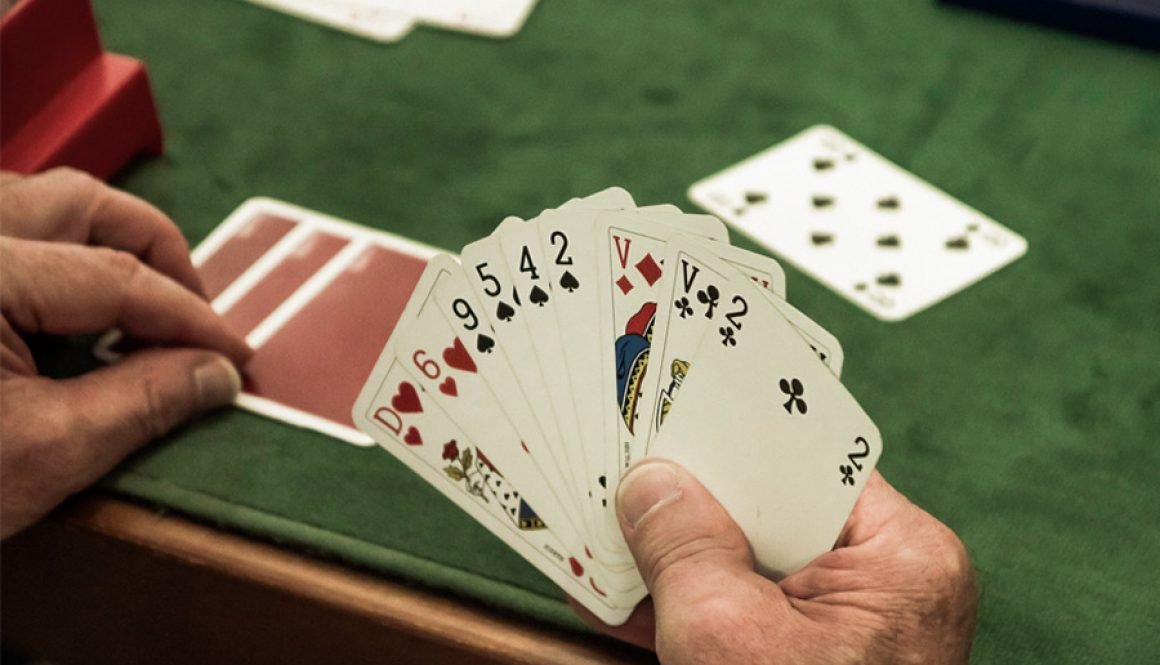
The intended audiences of this article are the people who have recently learned bridge and have started playing or are still in the learning process at the foundation level. The purpose here is to apprise such bridge players of the basic bridge structure and the environment – locally, nationally and worldwide.
Like any other game or sport, bridge is played at various levels. It can be just a casual session amongst friends or family members, it can be at a club with fellow members. Going a bit higher, tournament bridge at local clubs comes into the picture. Then comes serious, organised competitive bridge at a city, zonal, regional and national level. This shows that there is space for every kind of bridge player, depending on what one wants to do and how far one wants to go! It depends on one’s resources – time being the most scarce and costly one, the acquired skills set and if one has any competitive desire.
Bridge is an organised sport. World Bridge Federation (WBF) is the apex governing body. Bridge Federation of India (BFI) is a member of WBF. BFI is affiliated to the Government of India through the Ministry of Sports. Then there are state-wise bridge associations and so on. This structure allows competitive bridge to get organised. This helps in holding annual national championships. Moreover, BFI also sends official Indian teams for the world-level competitions held by WBF. The 2018 Asian Games held in Jakarta–Palembang saw bridge making its debut as a medal sport and India bagged 3 medals overall. WBF is also recognised by The Olympic Committee.
What is it that the beginners at bridge should aim at?
They just need to focus on getting the basics right. They need to understand how tricks and more tricks can be made, and how they should not squander their tricks. While they have to learn the bidding and the card play both, there should be a good balance struck between the two departments. Simple bidding system and attentive, alert card play can do wonders for beginners and the newcomers! But yes, patience and playing regularly are required for this.
If you get this mix right, you will have a sense of satisfaction at the end of your bridge sessions. Review a few deals where some mistakes we made and that would pave the way for gradually improving as a bridge player. Last but not the least, the desire to play good bridge and to learn more, has to come from within!

My answer to this question is, YES!
At the outset, let me state that I respect all popular bidding systems. I admire the thinkers who initiated and developed these bidding systems. I have experienced playing 2/3 of them.
However, I believe that beginners should be taught ‘Precision’ first. Thereafter, they can switch to any other system or have an additional one in their arsenal.
First and foremost, it helps to have a limited range of 11-15 HCPs for one level opening bids of 1D, 1H and 1S. Then you have the 1C opening bid which is for any 16+ hand. These two features make a beginner’s bidding life easy!
When the opening bid range is wider, bigger say up to 17 (like in 18+ 1C system) or up to 21 (like in Standard American system), then beginners have to deal with difficult rebid issues.
Further, in playing Precision, once the 1C bid happens and the responder has a positive response hand of 8/9 plus HCPs, then he instantly knows that the hand belongs to his side and that game must be reached.
The strength calculations and the thought process for beginners thus become relatively easy when playing the Precision system.
Is there any tough part? Yes – the 2C opening bid in Precision. This is a bit of a challenge because bidding starts at 2 level and hence responder has to immediately deal with bidding at 2 or 3 level. However this can be overcome with good learning and practice. (By the way, 1NT opening is not affected much. When playing Precision, one can play 14-16, 14-15 or 15-16 ranges).
For all these reasons, with great respect for other systems, I recommend the Precision system for absolute beginners.
My answer to this question is:
Willingness to Think & the Ability to Count up to Thirteen… Let me elaborate –
This game played with 52 playing cards, is largely based on logic and analysis. It requires memorising things. Logical reasoning and analytical ability means THINKING. If you like thinking and reaching some conclusions, then this is the perfect game for you! If you enjoy this process, then nothing like it. However, if thinking is a burden, undesirable for anyone, then it’s not easy to learn and enjoy playing bridge!
‘Counting up to 13’ may sound trivial but that’s all one needs to do again and again while playing this game. 13 cards per each of the four suits and 13 tricks to be played – this traditionally unlucky number 13 is the most important and auspicious number for a bridge player!
There you go then – have a deck of 52 cards and put your thinking cap on and start learning BRIDGE.
Welcome to the world of Bridge!

